
3D Necroprinting Explained
How Biotic Materials Are Being Used as Living Nozzles in 3D Printing
Fri Jan 23 2026 - 4 mins read

3D Necroprinting Explained
3D printing usually brings to mind plastic, metal, or resin being pushed through a mechanical nozzle. But researchers are now experimenting with something far more unusual.
3D necroprinting is a concept where biotic material, meaning biological or once-living material, plays the role of the nozzle or active printing interface. Instead of a purely mechanical process, biology itself becomes part of how structures are formed.
This may sound like science fiction, but it is rooted in real advances in biotechnology, materials science, and biofabrication.
What Does "3D Necroprinting" Mean?

The word necroprinting combines two ideas:
- necro, referring to biological or once-living matter
- printing, referring to controlled layer-by-layer fabrication
In simple terms, 3D necroprinting explores how biological tissues, cellular structures, or organic remnants can be used to guide, shape, or extrude material during a printing process.
The biological material is not just printed. It actively participates in the printing process.
How Is This Different From Traditional Bioprinting?
Traditional bioprinting focuses on printing living cells or bio-inks using mechanical nozzles.
3D necroprinting flips this idea.
Instead of:
- a metal nozzle
- pushing biological material out
It uses:
- biological structures
- as the nozzle itself
This can include organic scaffolds, cellular channels, plant tissue, or bio-derived microstructures that control how material flows and settles.
How Biotic Material Acts as a Nozzle
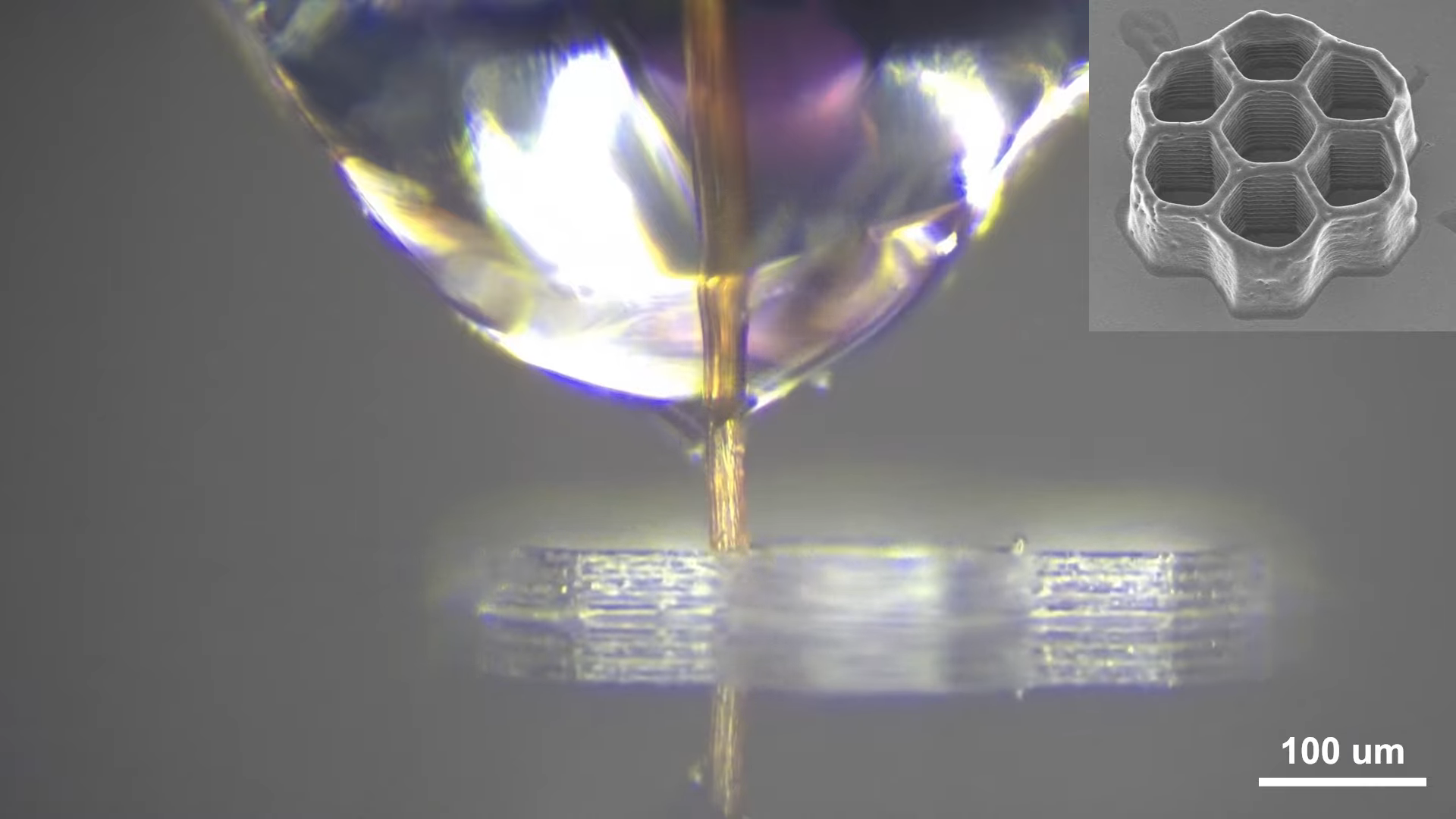
In 3D necroprinting, biotic material can influence printing in several ways.
It can:
- control flow direction at a microscopic level
- shape material through natural channels or fibers
- react chemically with the printed material
- guide structure formation based on biological patterns
The biological structure replaces precision machining with natural geometry that evolved over millions of years.
Why Researchers Are Exploring This Approach
Mechanical nozzles have limits.
They struggle with:
- ultra-fine structures
- soft and reactive materials
- dynamic shape changes
- complex internal geometry
Biological systems already solve many of these problems naturally.
By using biotic material as the nozzle, researchers gain:
- extreme precision at micro and nano scales
- self-organizing structures
- adaptive behavior during printing
- reduced need for complex machinery
Potential Applications of 3D Necroprinting
Although still experimental, this idea opens up several possibilities.
Tissue Engineering and Medicine
Biological nozzles could help create organ-like structures with realistic internal pathways, improving tissue scaffolds and implants.
Biomimetic Materials
Natural biological patterns could be used to create materials that behave like bone, wood, or muscle.
Sustainable Manufacturing
Using plant-based or bio-derived materials as printing components could reduce reliance on plastics and metals.
Research and Drug Testing
Complex biological structures created through necroprinting could be used to test drugs in environments that closely mimic real tissue.
Ethical and Scientific Challenges
Using biological or once-living material raises serious questions.
Researchers must consider:
- ethical sourcing of biological material
- safety and contamination risks
- reproducibility of organic structures
- long-term stability of printed results
This is why most work in necroprinting remains in controlled laboratory environments.
Is 3D Necroprinting Used Today?
At the moment, 3D necroprinting is mostly:
- a research concept
- an experimental technique
- an exploration of biological fabrication
It is not yet a commercial manufacturing method. However, many of its ideas influence modern bioprinting and biofabrication research.
Why This Matters for the Future
As technology moves closer to biology, the line between machine and organism becomes thinner.
3D necroprinting represents a shift in thinking:
- from forcing materials into shape
- to letting biology guide structure
It suggests a future where manufacturing may borrow more from nature’s design principles than from traditional engineering.
Conclusion
3D necroprinting is not about replacing machines with biology. It is about learning from biological systems and using their complexity in controlled ways.
By leveraging biotic material as the nozzle itself, researchers are questioning one of the most basic assumptions of 3D printing.
The nozzle does not have to be metal.
It does not even have to be mechanical.
In the long run, ideas like necroprinting may reshape how we think about fabrication, materials, and the role of life in manufacturing.