ElevenLabs Is More Than Text-to-Speech: 12 Things Developers Can Build With Its APIs
A practical developer's guide to voice AI, speech recognition, conversational agents, audio generation, and new SaaS opportunities
Full Article
Read the complete article, including examples, background, practical insights, and technical details.
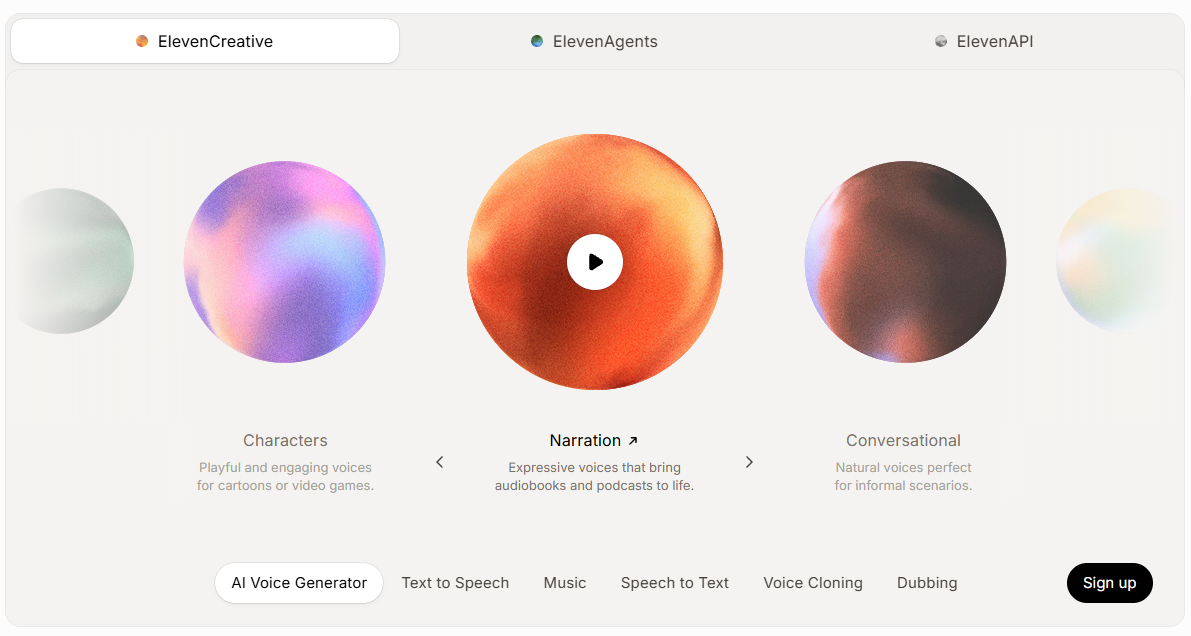
When most developers hear about ElevenLabs, they think of one thing: converting text into realistic human speech.
That was certainly one of the platform's biggest attractions. You could write a script, choose a voice, and generate audio that sounded remarkably natural.
But ElevenLabs has evolved into something much more interesting.
Today, it offers a collection of APIs for speech generation, transcription, voice agents, voice cloning, dubbing, sound effects, music, and audio processing.
For software developers, this opens up possibilities far beyond creating voiceovers for YouTube videos.
Imagine a React application where users can speak naturally to an AI assistant. A language-learning platform that responds to students in different voices. A game where NPCs generate dialogue dynamically. Or a customer support system that answers phone calls, accesses business data, and completes tasks.
These are no longer ideas that require building your own speech models from scratch.
With ElevenLabs, developers can focus on building the application while integrating speech intelligence through APIs.
Let's explore twelve practical possibilities.
1. Add Natural Text-to-Speech to Any Application
The most straightforward use of ElevenLabs is its Text-to-Speech API.
Instead of relying on the browser's built-in speech synthesis, developers can generate expressive speech using different voices, languages, and models.
Potential applications include:
- Article narration for blogging websites.
- Audio explanations in educational platforms.
- Voice feedback in productivity applications.
- Spoken notifications and announcements.
- Interactive storytelling applications.
For example, a blogging website could provide a "Listen to this article" feature.
A user opens an article, presses Play, and listens while reading or performing another activity.
Building It With React and Node.js
A simple architecture could look like this:
React frontend | | POST /api/speech v Node.js backend | | ElevenLabs Text-to-Speech API v Generated audio | v React audio player
The backend should handle API authentication so that the ElevenLabs API key is never exposed to the browser.
Here is a simplified Node.js example using the ElevenLabs REST API.
import express from "express";

const app = express();
app.use(express.json());

app.post("/api/speech", async (req, res) => {
  const { text } = req.body;

  if (typeof text !== "string" || !text.trim()) {
    return res.status(400).json({
      error: "Valid text is required",
    });
  }

  if (text.length > 2000) {
    return res.status(400).json({
      error: "Text exceeds the demo limit",
    });
  }

  const response = await fetch(
    `https://api.elevenlabs.io/v1/text-to-speech/${process.env.ELEVENLABS_VOICE_ID}`,
    {
      method: "POST",
      headers: {
        "xi-api-key": process.env.ELEVENLABS_API_KEY,
        "Content-Type": "application/json",
      },
      body: JSON.stringify({
        text,
        model_id: "eleven_multilingual_v2",
      }),
    },
  );

  if (!response.ok) {
    return res.status(502).json({
      error: "Speech generation failed",
    });
  }

  res.setHeader("Content-Type", "audio/mpeg");
  res.send(Buffer.from(await response.arrayBuffer()));
});
This example demonstrates the basic integration pattern. A production implementation should also include authentication, rate limiting, request timeouts, and appropriate error handling.
For websites with many readers, generating audio once and caching it can reduce repeated API usage.
2. Build Conversational AI Voice Agents
One of ElevenLabs' more interesting capabilities is conversational voice AI.
Instead of making users type messages into a chatbot, you can allow them to speak naturally.
The application listens, understands the request, generates a response, and speaks back.
ElevenLabs provides ElevenAgents for hosted conversational agents and Speech Engine for connecting voice capabilities to your own LLM backend.
Possible applications include:
- AI customer support representatives.
- Virtual receptionists.
- Voice-based appointment assistants.
- Personal productivity assistants.
- Interactive onboarding experiences.
A voice assistant could answer questions about an online store, check an order's status through an authorized backend API, or help customers navigate a product catalog.
The important distinction is that speech generation alone does not make an assistant intelligent.
The reasoning, knowledge retrieval, and business operations still need to be provided by an LLM, agent configuration, or backend system.
3. Build AI Tutors That Speak and Listen
Education is another promising application.
Imagine an AI tutor that can explain programming concepts, listen to student questions, and respond conversationally.
A student learning JavaScript might ask:
"Can you explain closures using a simple example?"
The system could retrieve the relevant educational material, generate an explanation, and speak the answer aloud.
The same approach could support:
- English pronunciation practice.
- Programming interview preparation.
- Interactive language lessons.
- Storytelling for children.
- Spoken quizzes and revision sessions.
ElevenLabs can provide speech recognition and voice generation, while an LLM handles explanations and adaptive tutoring.
Developers could also introduce multiple voices for different lessons or simulated conversations.
However, educational applications still need reliable content validation. A natural-sounding voice does not guarantee a correct explanation.
4. Create Multilingual Applications and Dubbing Platforms
Language support is one of the biggest opportunities in AI audio.
ElevenLabs provides multilingual speech generation and dubbing capabilities, with language coverage depending on the selected model.
A developer could create a platform where content creators upload videos and generate dubbed versions for different audiences.
For example, an English tutorial could be localized into Spanish, Hindi, or another supported language.
A possible workflow is:
Upload video → Detect speech → Transcribe → Translate → Generate localized speech → Synchronize audio → Export video
Potential products include:
- Multilingual educational platforms.
- Video localization services.
- International training portals.
- Podcast translation tools.
- Regional content distribution platforms.
For Indian developers, regional-language support could be especially interesting.
However, language availability and pronunciation quality must be tested for the specific model and language combination.
Translation quality, timing, speaker consistency, and cultural context also require attention.
5. Build Interactive Game Characters
Gaming is one of the most creative areas for voice AI.
Traditionally, NPC dialogue is recorded in advance. Developers write scripts, hire voice actors, record dialogue, and package the resulting audio with the game.
With AI voice generation, developers can experiment with dynamic dialogue.
Imagine an RPG where a shopkeeper responds differently depending on the player's reputation.
Or a detective game where suspects answer questions using dynamically generated speech.
A conceptual architecture might be:
Player input → Game state → Dialogue engine or LLM → ElevenLabs → NPC speech
The game state can provide context such as the character's personality, previous interactions, current quest, and available knowledge.
ElevenLabs then converts the generated dialogue into speech.
This approach could be used for:
- RPG companions.
- Interactive visual novels.
- Mystery games.
- AI dungeon masters.
- Procedurally generated conversations.
Developers should still control the dialogue system carefully. Unrestricted LLM responses can break established lore, reveal information prematurely, or create inconsistent characters.
For many games, a hybrid approach combining scripted dialogue with limited AI-generated responses may provide better reliability.
6. Create Audiobooks and Interactive Storytelling Apps
Audiobook production is another natural use case.
A developer could build an application that converts written stories into narrated audio.
More advanced systems could assign different voices to characters and generate dialogue with different emotional styles.
Possible features include:
- Chapter-based audio generation.
- Character-specific voices.
- Playback speed controls.
- Bookmarks and resume functionality.
- Multilingual narration.
- Text highlighting synchronized with audio.
A React PWA could provide a reading interface, while a backend generates and stores audio files.
For long-form content, generating audio chapter by chapter is generally more manageable than processing an entire book in one request.
It also allows failed generations to be retried without regenerating everything.
Developers must ensure they own or have permission to narrate and distribute the source material.
7. Build Speech-to-Text Productivity Tools
ElevenLabs also provides speech recognition through its Scribe models.
This allows developers to turn recorded or live audio into text.
Potential applications include:
- Meeting transcription.
- Voice notes.
- Interview transcription.
- Podcast transcripts.
- Lecture notes.
- Spoken task capture.
More sophisticated applications could combine transcription with an LLM.
For example:
Meeting recording → Speech-to-Text → LLM summarization → Action items → Task management integration
The resulting product could identify decisions, extract tasks, and prepare follow-up notes.
Speaker diarization and timestamps can make transcripts easier to navigate, although accuracy depends on audio quality and the selected model.
Applications processing meetings or personal conversations should obtain appropriate consent and establish clear retention policies.
8. Create Accessibility Features for Websites
Voice technology can make digital products more accessible.
A website could provide spoken navigation instructions, audio descriptions, or the ability to interact through voice commands.
Examples include:
- Read-aloud features for articles.
- Voice-controlled form navigation.
- Audio-based learning interfaces.
- Spoken explanations of complex content.
- Voice interaction for users with limited typing ability.
However, accessibility should not depend entirely on a third-party voice service.
Applications should continue supporting keyboard navigation, semantic HTML, screen readers, captions, and established accessibility standards.
ElevenLabs can enhance accessibility, but it should complement rather than replace foundational accessible design.
9. Generate Sound Effects for Games and Videos
ElevenLabs offers sound-effect generation from text prompts.
Instead of searching through large audio libraries, developers can describe the sound they need.
For example:
"An ancient wooden door slowly opening inside an abandoned castle."
Or:
"Heavy rain falling on a metal rooftop with distant thunder."
This capability can help game developers, video editors, and content creators experiment with audio assets.
Possible applications include:
- Game sound effects.
- Ambient soundscapes.
- Video transition effects.
- Interactive storytelling.
- UI feedback sounds.
- Prototype audio generation.
Developers can create an asset generation pipeline where prompts and generated files are stored alongside project metadata.
For real-time applications, pre-generating frequently used sounds is usually more practical than requesting new audio during every interaction.
10. Build AI Music and Audio Creation Tools
ElevenLabs also provides music generation capabilities.
Developers can build interfaces where users describe a musical style, mood, or intended use and receive generated audio.
Possible products include:
- Background music generators.
- Podcast intro creators.
- Game soundtrack prototyping tools.
- Music creation dashboards.
- Audio branding applications.
For example, a game development platform could let creators generate background tracks for different environments.
A calm village, an abandoned laboratory, and a dramatic boss battle could each have their own musical direction.
Music licensing requires particular attention.
Commercial permissions vary by product, plan, and intended distribution. Music used in advertising, films, games, or enterprise distribution may require additional licensing.
Developers should verify the applicable terms before offering generated music to paying customers.
11. Build Voice Cloning and Personalized Audio Products
ElevenLabs provides voice cloning and voice design capabilities.
This allows developers to build personalized audio experiences using voices that users are authorized to create or use.
Possible applications include:
- Personalized narration.
- Creator voiceovers.
- Brand-specific virtual assistants.
- Consistent voices for educational content.
- Custom voices for fictional characters.
For example, a creator could build a service that generates narration using their own authorized voice.
A business could design a distinctive synthetic voice for its customer-facing assistant.
Voice cloning also introduces serious privacy and impersonation risks.
Applications should require appropriate authorization, avoid cloning people without consent, and implement safeguards against deceptive or fraudulent use.
A personalized voice feature should never be treated as permission to reproduce someone else's identity.
12. Build Voice-Enabled SaaS Products
Perhaps the biggest opportunity is combining multiple ElevenLabs capabilities into a focused SaaS product.
Consider a voice-enabled customer service platform.
It could combine speech recognition, an LLM, a company knowledge base, text-to-speech, and business integrations.
Or consider an AI interview preparation platform.
The application could ask spoken questions, listen to candidates, evaluate their answers, and provide feedback.
Other product ideas include:
- AI language conversation partners.
- Voice-based CRM assistants.
- Automated podcast production tools.
- Interactive sales training platforms.
- Audio learning applications.
- Voice-powered documentation assistants.
The value of these products comes from solving a specific problem, not merely wrapping an audio API in a user interface.
Choosing the Right ElevenLabs Capability
Developers should choose APIs based on the application's actual requirements.
| Requirement | ElevenLabs capability |
|---|---|
| Read text aloud | Text-to-Speech |
| Convert recordings to text | Speech-to-Text |
| Build a hosted voice assistant | ElevenAgents |
| Add voice to an existing LLM | Speech Engine |
| Translate spoken content | Dubbing |
| Create authorized custom voices | Voice Cloning / Voice Design |
| Generate environmental audio | Sound Effects |
| Create background tracks | Music |
| Clean noisy recordings | Voice Isolator |
| Transform recorded speech | Voice Changer |
| Synchronize spoken audio with text | Forced Alignment |
These capabilities can be combined to create more advanced workflows.
A Practical Architecture for React Developers
For a production application, a useful architecture separates the frontend, backend, AI reasoning, and audio services.
React / Next.js | v Node.js / FastAPI backend | +-- Authentication and authorization | +-- Application business logic | +-- LLM / RAG service | +-- ElevenLabs APIs | +-- Database and object storage
The frontend handles user interaction, recording, and playback.
The backend manages API credentials, access control, usage limits, and integrations.
The LLM handles reasoning where needed.
ElevenLabs provides speech and audio capabilities.
Generated files can be stored in object storage and reused instead of repeatedly invoking the API.
For real-time conversational applications, WebSocket-based streaming and interruption handling can improve responsiveness.
Understanding API Costs
ElevenLabs pricing depends on the capability, model, and usage.
Text-to-Speech is generally metered by generated text volume, while transcription, dubbing, music, and other audio services use their respective billing units.
Before launching a product, developers should estimate:
- Expected active users.
- Average speech generated per user.
- Average audio uploaded or processed.
- Number of concurrent voice sessions.
- Storage and bandwidth costs.
- LLM and database expenses.
A product with 100 users generating occasional short voice clips has a very different cost profile from a real-time voice assistant serving thousands of conversations.
Caching, usage quotas, and choosing the appropriate model can help control spending.
For commercial products, verify the current plan's API entitlements and licensing terms.
Important Engineering Challenges
Integrating an audio API is relatively straightforward. Building a reliable audio product requires more work.
Latency
Conversational systems need to respond quickly enough to feel natural.
Streaming audio can reduce perceived delays, but total response time also includes speech recognition, LLM inference, networking, and application logic.
Cost Control
Audio generation can become expensive at scale.
Applications should enforce quotas, rate limits, and billing safeguards.
Privacy
Voice recordings may contain personal or confidential information.
Developers should define retention periods, consent mechanisms, and access controls.
Reliability
Production applications need retry policies, timeout handling, monitoring, and fallback behavior.
Licensing
Voice cloning, music generation, and commercial distribution may involve different permissions.
Content Quality
Generated speech can mispronounce names, technical terminology, and regional expressions.
Pronunciation testing and human review remain important.
Which ElevenLabs Project Should a Developer Build First?
For developers already comfortable with React and Node.js, a voice-enabled article reader is an excellent starting project.
It requires relatively little infrastructure and introduces the essential integration concepts.
The next step could be a transcription and summarization tool.
After that, a conversational AI application provides experience with real-time streaming, LLM integration, and more complex state management.
A practical progression is:
- Build a Text-to-Speech article reader.
- Add speech transcription to a notes application.
- Create a voice-based AI tutor.
- Integrate a knowledge base into a voice agent.
- Turn the strongest prototype into a focused SaaS product.
This approach allows developers to understand the capabilities and costs before committing to a larger product.
Final Thoughts
ElevenLabs is no longer just a tool for generating realistic voiceovers.
It has become a developer platform for building applications that can listen, speak, translate, and generate audio.
The possibilities span education, gaming, content creation, accessibility, customer support, and productivity.
But the most interesting opportunities are not necessarily the applications that generate the most audio.
They are the applications that use audio to remove friction from an existing workflow.
A student who can ask questions naturally. A reader who can listen to articles. A customer who can resolve an issue through conversation. A gamer who can interact with characters in a more dynamic world.
These experiences become possible when speech is treated as a core part of application design rather than an optional feature.
For developers, the question is no longer simply, "How can I convert text into speech?"
The better question is: What can I build when my application can listen, understand, and speak?
TL;DR
- ElevenLabs provides APIs for speech generation, transcription, voice agents, dubbing, music, sound effects, and audio processing.
- Developers can build voice assistants, AI tutors, interactive NPCs, audiobook platforms, and multilingual applications.
- ElevenAgents provides hosted conversational agents, while Speech Engine supports developers bringing their own LLM backend.
- React, Node.js, Next.js, and FastAPI can be used to integrate these capabilities.
- API keys should remain on the backend, with authentication, rate limits, and usage monitoring.
- Real-time applications require attention to streaming, latency, interruption handling, and reliability.
- Voice cloning and commercial audio distribution require appropriate permissions and licensing.
- The strongest product opportunities come from combining voice capabilities with useful business logic and domain-specific workflows.
References
- ElevenLabs Developer API: https://elevenlabs.io/api
- ElevenLabs Documentation: https://elevenlabs.io/docs/overview/intro
- ElevenLabs API Quickstart: https://elevenlabs.io/docs/eleven-api/quickstart
- ElevenLabs Speech Engine: https://elevenlabs.io/docs/overview/capabilities/speech-engine
- ElevenLabs API Pricing: https://elevenlabs.io/pricing/api
- ElevenLabs Agent Tooling: https://elevenlabs.io/docs/eleven-api/resources/agent-tooling
Comments load as you scroll…