Foundational Startup Books Every Founder Should Read
Timeless books that shape how great startups are built
Mar 21, 2026
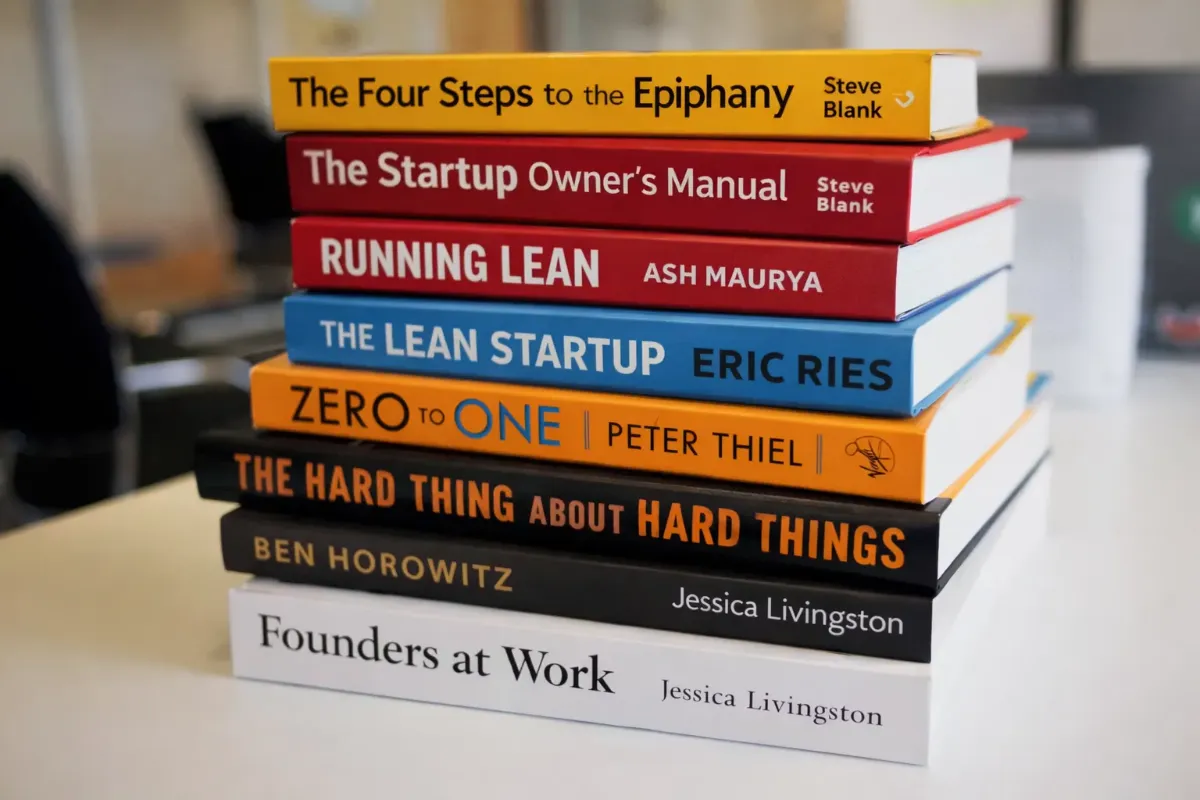
Building a startup is one of the most challenging journeys you can take.
There is no single playbook — but there are foundational books that have shaped how modern startups are built, validated, and scaled.
If you're a founder, aspiring entrepreneur, or someone interested in building products, these books provide timeless frameworks and insights.
Foundational Startup Books
1. The Four Steps to the Epiphany — Steve Blank
This book introduced the concept of Customer Development, a framework that changed how startups validate ideas.
Key takeaway:
- Don’t build first — validate your customers and problem first
2. The Startup Owner's Manual — Steve Blank
A practical guide that expands on customer development with step-by-step execution.
Key takeaway:
- Startups are not small companies — they require search, not execution
3. Running Lean — Ash Maurya
A more actionable version of Lean Startup principles, focused on building and testing ideas quickly.
Key takeaway:
- Use the Lean Canvas to validate your business model early
4. The Lean Startup — Eric Ries
One of the most influential startup books of all time.
It introduced concepts like:
- MVP (Minimum Viable Product)
- Build → Measure → Learn loop
Key takeaway:
- Iterate quickly and learn from real user feedback
5. Zero to One — Peter Thiel
Focuses on building unique, monopoly-like businesses rather than competing in crowded markets.
Key takeaway:
- Create something truly new, not just a better version of what exists
6. The Hard Thing About Hard Things — Ben Horowitz
A brutally honest look at the realities of running a startup.
Key takeaway:
- There are no easy answers — leadership is about making tough decisions under uncertainty
7. Founders at Work — Jessica Livingston
A collection of interviews with founders from companies like Apple, PayPal, and Hotmail.
Key takeaway:
- Every successful startup journey is messy, unpredictable, and deeply human
Why These Books Matter
These books cover the core pillars of building startups:
- idea validation
- product-market fit
- scaling challenges
- leadership and decision-making
- real founder experiences
Together, they provide a complete mental model for startup building.
Suggested Reading Order
If you're just starting out:
- The Lean Startup
- Running Lean
- The Four Steps to the Epiphany
- The Startup Owner’s Manual
- Zero to One
- The Hard Thing About Hard Things
- Founders at Work
This order helps you move from theory → execution → mindset → real stories.
Final Thoughts
Startups are unpredictable, but learning from those who have built before you can save years of mistakes.
These books won’t guarantee success — but they will give you:
- better decision-making frameworks
- clearer thinking
- stronger intuition
And sometimes, that’s the difference between building something that survives… and something that scales.
TL;DR
7 foundational startup books:
- The Four Steps to the Epiphany — Steve Blank
- The Startup Owner’s Manual — Steve Blank
- Running Lean — Ash Maurya
- The Lean Startup — Eric Ries
- Zero to One — Peter Thiel
- The Hard Thing About Hard Things — Ben Horowitz
- Founders at Work — Jessica Livingston
If you’re building a startup, these are must-reads.


