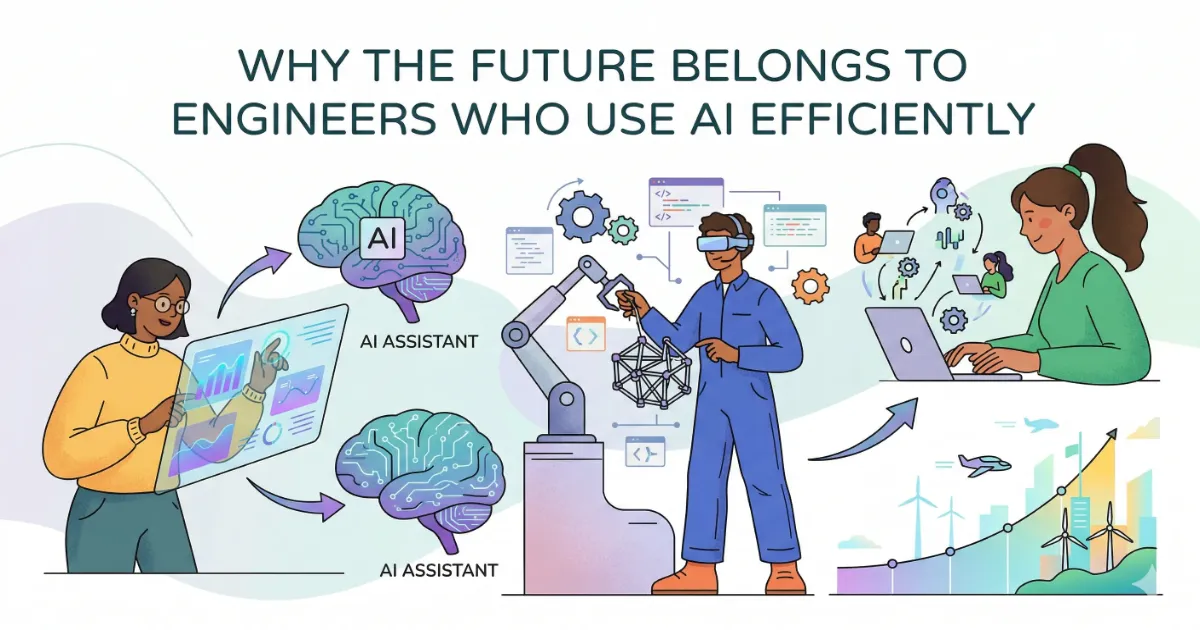
The Jobs AI Will Generate
A Narrative Look at the Careers Emerging From the Intelligence Revolution
Feb 2, 2026 - 6 mins read
By Nicho Antony

When people first hear about AI, the conversation usually turns dark.
Jobs will disappear.
Automation will replace humans.
Entire industries will shrink.
But history tells a more balanced story. Every major technological shift has removed certain roles while quietly creating others. The internet did not end work. It reshaped it. Smartphones did not eliminate jobs. They generated new ones no one imagined before.
AI is following the same pattern.
The First Wave: Translators Between Humans and AI
In offices across the world, a new type of professional is emerging.
They are not traditional engineers.
They are not pure business analysts either.
They are the ones who understand both how AI systems behave and what organizations need.
These roles include:
- AI integration specialists
- prompt designers
- workflow automation consultants
- AI operations managers
Their job is not to build models from scratch. It is to make AI useful inside real businesses.
The Rise of AI Supervisors
AI systems are powerful but not perfect.
Companies are discovering that AI outputs must be:
- reviewed
- verified
- refined
- aligned with policy
This creates demand for roles such as:
- AI quality reviewers
- AI compliance analysts
- ethical AI auditors
Instead of replacing workers, AI often requires humans to supervise and guide it.
New Creative Roles
Contrary to early fears, creative industries are not vanishing.
They are evolving.
Writers, designers, and video creators now work alongside AI tools that accelerate idea generation and production. This has given birth to hybrid roles like:
- AI assisted content strategist
- synthetic media producer
- AI enhanced designer
These professionals combine creativity with technical awareness.
The skill is not just creating content. It is knowing how to guide AI to produce something meaningful.
AI in Healthcare and Research
In hospitals and research labs, AI is becoming an assistant.
Doctors and scientists increasingly rely on:
- AI diagnostic support
- drug discovery tools
- medical imaging analysis
This creates roles such as:
- clinical AI specialist
- AI medical data coordinator
- healthcare AI implementation lead
These are not replacements for doctors. They are new roles that help integrate AI safely into life saving environments.
Data Curators and Trainers
AI models depend on high quality data.
Behind every advanced system are people who:
- clean datasets
- label information
- remove bias
- monitor training quality
These roles are expanding in industries where data quality determines model performance.
The quiet workforce behind AI growth continues to grow.
Infrastructure and Optimization Experts
AI systems require enormous computing power.
This has led to growing demand for:
- AI infrastructure engineers
- data center optimization specialists
- edge AI deployment experts
These jobs focus on making AI systems efficient, scalable, and reliable.
The intelligence revolution also creates engineering work that few outside the industry notice.
Personalized AI Advisors
As AI tools become accessible to individuals, a new advisory space is emerging.
People now seek help with:
- integrating AI into small businesses
- improving personal productivity
- automating workflows
Consultants who understand AI tools and real world use cases are finding opportunity.
The future includes not only AI systems but also human guides who help others use them effectively.
Jobs We Cannot Yet Name
Perhaps the most interesting part of this shift is the unknown.
Twenty years ago, no one predicted social media managers or app developers. In the same way, many AI generated roles do not yet have titles.
As AI integrates into law, education, logistics, agriculture, and entertainment, new specializations will appear naturally.
Innovation tends to create problems that only new roles can solve.
A Different Way to Think About Work
The fear that AI eliminates jobs comes from viewing work as static.
In reality, work evolves with tools.
AI does automate tasks, but it also:
- increases productivity
- lowers barriers to entry
- creates new service models
- expands industries
The key is adaptability.
Those who learn how AI works and how it fits into their field position themselves for emerging roles.
Final Thoughts
AI will change the job market. That much is certain.
But change does not only mean loss. It also means creation.
The jobs AI will generate may not look like traditional roles. They will blend technical understanding with human judgment. They will require oversight, creativity, and responsibility.
The future of work is not about humans versus machines.
It is about humans who know how to work with machines.
And in that future, opportunity belongs to those willing to evolve.