AI Can Port a Compiler in Days. Keeping It in Sync Is the Real Job.
Cloudflare and VoidZero's experimental Rust port of TypeScript reveals how AI is changing software engineering and why compatibility matters more than ever.
Full Article
Read the complete article, including examples, background, practical insights, and technical details.
Rewriting a compiler used to be the kind of engineering project that required a dedicated team, months of planning, and years of maintenance.
Now, AI agents are changing that equation.
On October 20, 2026, Cloudflare announced an experimental Rust port of the TypeScript compiler, developed in collaboration with VoidZero and with involvement from the TypeScript team.
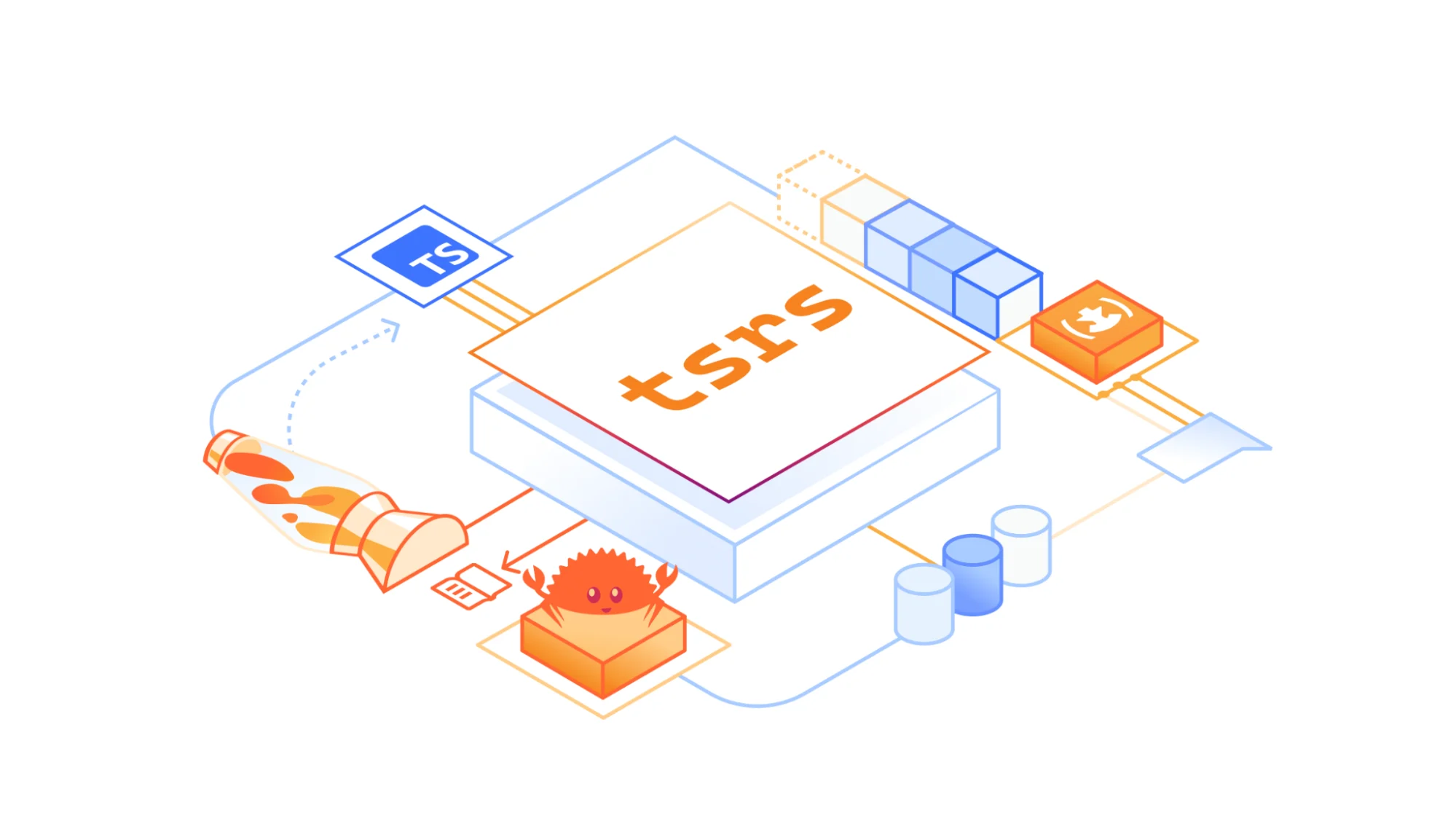
The project is called tsrs.
According to Cloudflare, the experimental compiler can run up to eight times faster than TypeScript 7.0 while consuming approximately 70% less memory in matched benchmark configurations.
Those numbers alone would make the project interesting.
But the bigger story is how the compiler was developed.
Cloudflare says modern frontier AI models can now perform software ports of this scale almost independently within days.
That represents a remarkable shift in the economics of software development.
However, writing the first version of a compiler is only one part of the challenge.
The real difficulty is ensuring that the new implementation continues to behave like TypeScript as the language evolves.
AI may have made rewriting software cheaper. It has not made compatibility optional.
Why Would Anyone Rewrite the TypeScript Compiler?
TypeScript has become one of the foundational technologies of modern web development.
It powers applications built with React, Angular, Vue, Next.js, and countless Node.js frameworks.
Developers rely on TypeScript for static type checking, editor integration, code navigation, and early detection of programming mistakes.
However, the TypeScript compiler performs computationally expensive operations.
It must parse source files, resolve imports, understand complex type relationships, validate assignments, and produce diagnostics.
Large projects can contain thousands of files and enormous dependency graphs.
Advanced TypeScript features such as conditional types, mapped types, generics, and recursive type definitions can make type checking particularly demanding.
This is one reason compiler performance matters.
When a compiler becomes faster, the benefits extend beyond command-line builds.
Developers can receive faster feedback, continuous integration pipelines can complete checks sooner, and large repositories can consume fewer computing resources.
Microsoft has already been working on a native implementation of TypeScript, with TypeScript 7.0 representing a major part of that transition, as described in the official TypeScript repository.
Cloudflare and VoidZero's Rust experiment introduces another approach to the same performance problem.
What Exactly Is tsrs?
tsrs is an experimental implementation of the TypeScript compiler in Rust.
The project is distributed as an npm package, making it possible to explore the compiler within the existing JavaScript and TypeScript ecosystem.
The objective is not simply to create another programming language or introduce an alternative type system.
It is to reproduce TypeScript's existing compiler behavior using a different implementation language.
That distinction is essential.
A compiler replacement must understand the same syntax, type relationships, module resolution rules, and diagnostics expected by developers.
Even small behavioral differences can create serious compatibility problems.
For example, imagine a TypeScript project that successfully compiles with the official compiler but fails with a Rust implementation.
From a user's perspective, that is not a performance improvement.
It is a regression.
The ultimate value of a compiler port depends on whether developers can adopt it without rewriting their applications or changing their expectations of the language.
The Performance Numbers Are Impressive
Cloudflare reports substantial performance improvements from its experimental Rust implementation.
| Metric | Cloudflare's reported result |
|---|---|
| Compiler | tsrs |
| Implementation language | Rust |
| Baseline | TypeScript 7.0 |
| Execution speed | Up to 8x faster |
| Memory usage | Approximately 70% lower |
| Distribution | Experimental npm package |
| Development approach | AI-assisted compiler port |
| Status | Experimental |
These figures refer to Cloudflare's matched benchmark configurations.
They should not be interpreted as a guarantee that every TypeScript application will compile eight times faster.
Performance depends on several factors, including project size, dependency structure, type complexity, hardware, and compiler configuration.
The phrase up to eight times faster describes a reported best-case improvement, not necessarily an average across real-world projects.
Nevertheless, the potential impact is substantial.
Consider a hypothetical TypeScript check that currently takes 80 seconds.
An eightfold improvement would reduce that operation to approximately 10 seconds, assuming the same workload achieved the reported speedup.
For a developer running type checks occasionally, this would be convenient.
For an organization running thousands of CI checks every day, the accumulated savings could become significant.
Lower memory consumption could also make large TypeScript projects easier to run in constrained environments.
Why Rust Makes Sense for Compiler Development
Rust has become increasingly popular for building high-performance developer tools.
Projects such as SWC, Biome, and other native tooling initiatives demonstrate how Rust can be used to implement fast parsers, transformers, and code analysis systems.
Several properties make Rust attractive for compiler development.
1. Native Execution
Rust compiles to native machine code, avoiding some of the runtime overhead associated with JavaScript execution. See the Rust language documentation.
This can improve performance for workloads involving large amounts of parsing, tree traversal, and data processing.
2. Memory Management
Rust provides memory safety without requiring a traditional tracing garbage collector.
Compiler implementations often construct large syntax trees and maintain complex internal data structures.
Reducing memory overhead and allocation pressure can improve both speed and resource utilization.
3. Predictable Performance
Rust gives developers control over data representation, allocation, and execution behavior.
These characteristics can be valuable when optimizing performance-critical compiler operations.
4. WebAssembly Support
Rust can compile to WebAssembly, creating opportunities to run compiler functionality outside traditional native execution environments.
This is particularly relevant to Cloudflare's broader ambitions.
However, Rust does not automatically make every implementation faster.
Algorithm design, memory layout, caching, parallelism, and the efficiency of the type checker remain critical.
A poorly designed Rust compiler can still be slower than a well-optimized implementation in another language.
AI Agents Are Changing the Cost of Rewriting Software
The most provocative part of Cloudflare's announcement is its claim about AI-assisted development.
Cloudflare says frontier AI models can now perform large software ports almost independently in a matter of days.
This would have been difficult to imagine only a few years ago.
A compiler is not a simple application.
It contains interconnected systems for parsing, semantic analysis, type checking, error reporting, and module resolution.
Reimplementing these systems requires understanding both the existing codebase and the behavior expected by users.
Historically, translating such a system from one language to another involved extensive manual engineering.
Developers needed to study the original implementation, translate its architecture, reproduce its algorithms, and verify the result.
AI coding agents can potentially accelerate several parts of this process.
They can inspect source files, identify corresponding modules, translate functions, create tests, investigate compilation errors, and propose fixes.
More importantly, agents can repeat these operations across a large codebase.
This does not mean that AI independently understands every subtlety of compiler design.
It means that human engineers may be able to delegate substantial implementation work while concentrating on architecture, verification, and difficult technical decisions.
That changes the economics of large-scale software migration.
Rewriting Is Becoming Cheaper. Maintenance Is Not.
Here is the central engineering problem.
TypeScript is not a static specification.
The language continues to evolve.
New syntax is introduced. Type checking behavior changes. Bugs are fixed. Module resolution rules are updated. Diagnostics are refined.
Every change to the official compiler creates the possibility that an alternative implementation will behave differently.
A Rust port that is perfectly compatible today could become incompatible tomorrow.
This is where the challenge moves from translation to synchronization.
Imagine that the official TypeScript compiler introduces a change to generic type inference.
The Rust implementation must identify the change, understand its implications, update the corresponding logic, and verify that the new behavior matches the original.
Now imagine this process repeating continuously across hundreds of compiler changes.
A one-time port is an engineering milestone.
Maintaining compatibility is an ongoing engineering obligation.
This distinction matters for every organization considering AI-assisted rewrites of mature software systems.
The first version is no longer necessarily the most expensive part of the project.
Long-term correctness may be.
Cloudflare's Plan: Let Agents Maintain the Port
Cloudflare's approach reportedly extends beyond using AI to produce the initial implementation.
The project is expected to merge with Theo Browne's similar tsc-rs effort, consolidating work rather than maintaining competing implementations.
AI agents are also intended to keep the Rust port synchronized with upstream TypeScript changes on a daily basis.
This is arguably more interesting than the initial rewrite.
Instead of treating AI as a one-time code generator, the project treats agents as ongoing maintenance contributors.
A conceptual synchronization workflow might look like this:
- Detect new changes in the upstream TypeScript repository.
- Identify compiler components affected by those changes.
- Ask coding agents to implement equivalent changes in Rust.
- Run compatibility and regression tests.
- Investigate behavioral differences.
- Review proposed changes and integrate validated updates.
This describes a possible maintenance architecture, not a verified step-by-step account of tsrs's internal automation.
The important idea is continuous compatibility management.
If this approach works reliably, it could establish a new pattern for maintaining alternative implementations of mature software projects.
Compatibility Testing Becomes the Most Important Infrastructure
When AI agents generate large amounts of code, testing becomes even more important.
A compiler port cannot be validated merely by confirming that it builds successfully.
It must demonstrate that it produces equivalent behavior across a broad range of programs.
One useful approach is differential testing.
The same input is processed by two implementations, and their results are compared.
For a TypeScript compiler, this could involve running the official compiler and the Rust port against the same project.
The test system would then compare:
- Whether compilation succeeds or fails.
- The diagnostics produced for invalid programs.
- Type checking behavior.
- Module resolution results.
- Output artifacts, where applicable.
- Behavior across different compiler options.
Any unexpected difference becomes a candidate compatibility defect.
However, even differential testing has limitations.
Some differences may be intentional. Diagnostic formatting may vary without changing semantic correctness. Timing-dependent behavior and implementation-specific details may also complicate comparisons.
A robust testing system needs to distinguish meaningful incompatibilities from harmless differences.
This requires carefully designed test suites and clear compatibility requirements.
Why Existing Test Suites Become Extremely Valuable
Large mature software projects accumulate years of tests.
These tests often encode behaviors that are not fully documented elsewhere.
For example, a compiler's test suite may contain thousands of unusual cases involving generic inference, overloaded functions, declaration files, module resolution, and obscure language interactions.
Some tests exist because users previously encountered unexpected behavior.
Others preserve compatibility decisions made years earlier.
For an AI-generated port, these tests become a valuable source of behavioral truth.
The agents can translate implementation details, but the tests help establish whether the translation preserves the original contract.
This suggests a broader lesson for software engineering.
As AI makes implementation cheaper, well-maintained test suites become increasingly valuable organizational assets.
They allow teams to change internal implementations without losing confidence in external behavior.
In that environment, the quality of a project's tests may matter more than the amount of code it contains.
TypeScript in WebAssembly Could Be the Bigger Opportunity
Cloudflare's announcement describes ambitions beyond running TypeScript faster on developer machines.
A Rust implementation creates opportunities to run TypeScript compiler functionality through WebAssembly.
This could enable new execution environments.
Browser-Based Development Tools
Imagine a browser-based editor that performs TypeScript analysis locally without relying entirely on a remote language service.
WebAssembly could make it easier to deliver native-style compiler functionality within a browser environment.
Sandboxed Code Execution
Cloud platforms increasingly need to inspect, transform, and validate untrusted code.
A WebAssembly-compatible compiler could operate inside constrained execution environments with carefully controlled access to system resources.
Edge Development Environments
Developer tooling could potentially run closer to users or within lightweight cloud environments.
However, a compiler running in WebAssembly does not automatically provide complete TypeScript language-service functionality.
Features such as project indexing, incremental analysis, editor integration, and filesystem access require additional engineering.
The portability opportunity is real, but it should not be confused with an already completed browser-based development platform.
Some Improvements Are Already Reaching TypeScript 7.1
One notable detail in Cloudflare's announcement is that some performance improvements identified during the work have reportedly made their way into the TypeScript 7.1 beta.
This illustrates another potential benefit of alternative implementations.
A rewrite can reveal optimization opportunities that are useful even when the rewrite itself is not adopted.
Working in a different language or architecture can encourage engineers to reconsider data structures, allocation strategies, and algorithmic assumptions.
Those insights can sometimes be transferred back into the original project.
In this sense, a port can serve as both an alternative implementation and a source of optimization research.
That creates value beyond the performance of the new compiler alone.
What This Means for React and Next.js Developers
For developers working with React, Next.js, and large TypeScript applications, the practical implications are worth watching.
Faster Type Checking
Large frontend repositories can spend considerable time running TypeScript checks.
A compatible faster compiler could reduce feedback delays during development and CI.
Lower CI Resource Consumption
Reduced memory usage could make type checking more efficient in containerized build environments.
This could matter for teams running many parallel jobs.
Better Browser-Based Tooling
WebAssembly support could create opportunities for richer online editors, playgrounds, and development tools.
More Compiler Choices
Alternative implementations may encourage experimentation with different performance and deployment tradeoffs.
However, tsrs remains experimental.
Developers should not assume it is a drop-in replacement for their production TypeScript toolchain.
Compatibility, supported compiler options, editor integration, and real-world project behavior must be evaluated before adoption.
Should You Replace TypeScript With tsrs Today?
For most production applications, the sensible approach is to experiment rather than migrate immediately.
Start with a non-critical project or a dedicated benchmark branch.
Compare the official TypeScript compiler and tsrs using identical project configurations.
Measure execution time and peak memory usage, but also compare diagnostic results and compatibility with the project's existing tooling.
Pay particular attention to advanced type features, declaration files, path aliases, project references, and monorepo configurations.
If the results are promising, tsrs could become useful for specific workflows as the project matures.
But performance should never be evaluated in isolation.
A compiler that finishes quickly while missing important type errors is not an improvement.
For production development, correctness and compatibility remain essential.
The Bigger Lesson: Software Rewrites May Become a Continuous Process
Cloudflare's announcement raises a question that extends far beyond TypeScript.
What happens when rewriting a mature software system becomes inexpensive enough to attempt routinely?
Organizations have traditionally avoided rewrites because they are risky, time-consuming, and expensive.
Even when a different programming language offers performance or maintainability advantages, the cost of rebuilding existing behavior can outweigh the benefits.
AI agents could change that calculation.
A team might use agents to experiment with a Rust implementation of a JavaScript tool, migrate a legacy service to another language, or create a WebAssembly-compatible version of an existing library.
But the easier rewrites become, the more important it is to understand their maintenance costs.
Every alternative implementation creates another system that must be tested, secured, and kept compatible.
Without reliable synchronization and verification, organizations could end up maintaining more software rather than less.
The real opportunity is not unlimited rewriting.
It is making carefully selected rewrites economically practical while automating much of the work required to maintain them.
The Future of Software Engineering Is Shifting Toward Verification
AI coding agents are steadily reducing the effort required to produce code.
But software engineering has never been only about producing code.
It is about delivering systems that behave correctly, remain reliable, and continue working as requirements evolve.
The tsrs experiment highlights this distinction.
Agents may translate thousands of functions and reproduce large portions of an existing architecture.
Yet the resulting compiler still needs a reliable method for establishing equivalence with the original.
That requires testing, evaluation, compatibility analysis, and engineering judgment.
As code generation becomes cheaper, these capabilities may become increasingly important.
The scarce skill may shift from writing implementations to defining what correctness means and proving that an implementation satisfies it.
For software engineers, that is an important change in perspective.
The future may reward those who can design systems that agents can build, test, and maintain safely.
Final Thoughts
Cloudflare and VoidZero's Rust port of TypeScript is interesting for several reasons.
It demonstrates the potential performance benefits of alternative compiler implementations.
It explores opportunities for WebAssembly-based developer tooling.
And it provides a concrete example of AI agents being used to accelerate a complex software engineering project.
But the most important lesson is about maintenance.
A compiler is not finished when its code has been translated.
It must continue to match the behavior of an evolving language.
If AI agents can reliably handle that ongoing synchronization, they could change the economics of maintaining alternative implementations across the software industry.
That possibility is more consequential than any single benchmark result.
AI may make the first rewrite dramatically cheaper. The engineering breakthrough will be keeping that rewrite correct for years.
TL;DR
- Cloudflare and VoidZero announced tsrs, an experimental Rust port of the TypeScript compiler, on October 20, 2026.
- Cloudflare reports performance up to 8x faster than TypeScript 7.0 with approximately 70% lower memory usage in matched setups.
- The project involves the TypeScript team and is expected to merge with Theo Browne's tsc-rs effort.
- Cloudflare says frontier AI models can now complete large software ports almost independently within days.
- AI agents are intended to keep the Rust implementation synchronized with upstream TypeScript changes daily.
- Some performance improvements have reportedly been incorporated into the TypeScript 7.1 beta.
- WebAssembly support could enable new browser-based, sandboxed, and cloud developer tooling.
- tsrs remains experimental, and production adoption requires careful compatibility testing.
- The broader lesson is that as AI reduces implementation costs, verification, testing, and long-term compatibility become more valuable.
References
- Cloudflare — Introducing tsrs: A Port of TypeScript to Rust
- tsrs — Rust port of TypeScript
- tsrs — Benchmark configurations
- TypeScript — Official website and GitHub repository
- Rust — Official website
- WebAssembly — Official website
AI Can Port a Compiler in Days. Keeping It in Sync Is the Real Job.
Rewriting a compiler used to be the kind of engineering project that required a dedicated team, months of planning, and years of maintenance.
Now, AI agents are changing that equation.
On October 20, 2026, Cloudflare announced an experimental Rust port of the TypeScript compiler, developed in collaboration with VoidZero and with involvement from the TypeScript team.
The project is called tsrs.
According to Cloudflare, the experimental compiler can run up to eight times faster than TypeScript 7.0 while consuming approximately 70% less memory in matched benchmark configurations.
Those numbers alone would make the project interesting.
But the bigger story is how the compiler was developed.
Cloudflare says modern frontier AI models can now perform software ports of this scale almost independently within days.
That represents a remarkable shift in the economics of software development.
However, writing the first version of a compiler is only one part of the challenge.
The real difficulty is ensuring that the new implementation continues to behave like TypeScript as the language evolves.
AI may have made rewriting software cheaper. It has not made compatibility optional.
Why Would Anyone Rewrite the TypeScript Compiler?
TypeScript has become one of the foundational technologies of modern web development.
It powers applications built with React, Angular, Vue, Next.js, and countless Node.js frameworks.
Developers rely on TypeScript for static type checking, editor integration, code navigation, and early detection of programming mistakes.
However, the TypeScript compiler performs computationally expensive operations.
It must parse source files, resolve imports, understand complex type relationships, validate assignments, and produce diagnostics.
Large projects can contain thousands of files and enormous dependency graphs.
Advanced TypeScript features such as conditional types, mapped types, generics, and recursive type definitions can make type checking particularly demanding.
This is one reason compiler performance matters.
When a compiler becomes faster, the benefits extend beyond command-line builds.
Developers can receive faster feedback, continuous integration pipelines can complete checks sooner, and large repositories can consume fewer computing resources.
Microsoft has already been working on a native implementation of TypeScript, with TypeScript 7.0 representing a major part of that transition, as described in the official TypeScript repository.
Cloudflare and VoidZero's Rust experiment introduces another approach to the same performance problem.
What Exactly Is tsrs?
tsrs is an experimental implementation of the TypeScript compiler in Rust.
The project is distributed as an npm package, making it possible to explore the compiler within the existing JavaScript and TypeScript ecosystem.
The objective is not simply to create another programming language or introduce an alternative type system.
It is to reproduce TypeScript's existing compiler behavior using a different implementation language.
That distinction is essential.
A compiler replacement must understand the same syntax, type relationships, module resolution rules, and diagnostics expected by developers.
Even small behavioral differences can create serious compatibility problems.
For example, imagine a TypeScript project that successfully compiles with the official compiler but fails with a Rust implementation.
From a user's perspective, that is not a performance improvement.
It is a regression.
The ultimate value of a compiler port depends on whether developers can adopt it without rewriting their applications or changing their expectations of the language.
The Performance Numbers Are Impressive
Cloudflare reports substantial performance improvements from its experimental Rust implementation.
| Metric | Cloudflare's reported result |
|---|---|
| Compiler | tsrs |
| Implementation language | Rust |
| Baseline | TypeScript 7.0 |
| Execution speed | Up to 8x faster |
| Memory usage | Approximately 70% lower |
| Distribution | Experimental npm package |
| Development approach | AI-assisted compiler port |
| Status | Experimental |
These figures refer to Cloudflare's matched benchmark configurations.
They should not be interpreted as a guarantee that every TypeScript application will compile eight times faster.
Performance depends on several factors, including project size, dependency structure, type complexity, hardware, and compiler configuration.
The phrase up to eight times faster describes a reported best-case improvement, not necessarily an average across real-world projects.
Nevertheless, the potential impact is substantial.
Consider a hypothetical TypeScript check that currently takes 80 seconds.
An eightfold improvement would reduce that operation to approximately 10 seconds, assuming the same workload achieved the reported speedup.
For a developer running type checks occasionally, this would be convenient.
For an organization running thousands of CI checks every day, the accumulated savings could become significant.
Lower memory consumption could also make large TypeScript projects easier to run in constrained environments.
Why Rust Makes Sense for Compiler Development
Rust has become increasingly popular for building high-performance developer tools.
Projects such as SWC, Biome, and other native tooling initiatives demonstrate how Rust can be used to implement fast parsers, transformers, and code analysis systems.
Several properties make Rust attractive for compiler development.
1. Native Execution
Rust compiles to native machine code, avoiding some of the runtime overhead associated with JavaScript execution. See the Rust language documentation.
This can improve performance for workloads involving large amounts of parsing, tree traversal, and data processing.
2. Memory Management
Rust provides memory safety without requiring a traditional tracing garbage collector.
Compiler implementations often construct large syntax trees and maintain complex internal data structures.
Reducing memory overhead and allocation pressure can improve both speed and resource utilization.
3. Predictable Performance
Rust gives developers control over data representation, allocation, and execution behavior.
These characteristics can be valuable when optimizing performance-critical compiler operations.
4. WebAssembly Support
Rust can compile to WebAssembly, creating opportunities to run compiler functionality outside traditional native execution environments.
This is particularly relevant to Cloudflare's broader ambitions.
However, Rust does not automatically make every implementation faster.
Algorithm design, memory layout, caching, parallelism, and the efficiency of the type checker remain critical.
A poorly designed Rust compiler can still be slower than a well-optimized implementation in another language.
AI Agents Are Changing the Cost of Rewriting Software
The most provocative part of Cloudflare's announcement is its claim about AI-assisted development.
Cloudflare says frontier AI models can now perform large software ports almost independently in a matter of days.
This would have been difficult to imagine only a few years ago.
A compiler is not a simple application.
It contains interconnected systems for parsing, semantic analysis, type checking, error reporting, and module resolution.
Reimplementing these systems requires understanding both the existing codebase and the behavior expected by users.
Historically, translating such a system from one language to another involved extensive manual engineering.
Developers needed to study the original implementation, translate its architecture, reproduce its algorithms, and verify the result.
AI coding agents can potentially accelerate several parts of this process.
They can inspect source files, identify corresponding modules, translate functions, create tests, investigate compilation errors, and propose fixes.
More importantly, agents can repeat these operations across a large codebase.
This does not mean that AI independently understands every subtlety of compiler design.
It means that human engineers may be able to delegate substantial implementation work while concentrating on architecture, verification, and difficult technical decisions.
That changes the economics of large-scale software migration.
Rewriting Is Becoming Cheaper. Maintenance Is Not.
Here is the central engineering problem.
TypeScript is not a static specification.
The language continues to evolve.
New syntax is introduced. Type checking behavior changes. Bugs are fixed. Module resolution rules are updated. Diagnostics are refined.
Every change to the official compiler creates the possibility that an alternative implementation will behave differently.
A Rust port that is perfectly compatible today could become incompatible tomorrow.
This is where the challenge moves from translation to synchronization.
Imagine that the official TypeScript compiler introduces a change to generic type inference.
The Rust implementation must identify the change, understand its implications, update the corresponding logic, and verify that the new behavior matches the original.
Now imagine this process repeating continuously across hundreds of compiler changes.
A one-time port is an engineering milestone.
Maintaining compatibility is an ongoing engineering obligation.
This distinction matters for every organization considering AI-assisted rewrites of mature software systems.
The first version is no longer necessarily the most expensive part of the project.
Long-term correctness may be.
Cloudflare's Plan: Let Agents Maintain the Port
Cloudflare's approach reportedly extends beyond using AI to produce the initial implementation.
The project is expected to merge with Theo Browne's similar tsc-rs effort, consolidating work rather than maintaining competing implementations.
AI agents are also intended to keep the Rust port synchronized with upstream TypeScript changes on a daily basis.
This is arguably more interesting than the initial rewrite.
Instead of treating AI as a one-time code generator, the project treats agents as ongoing maintenance contributors.
A conceptual synchronization workflow might look like this:
- Detect new changes in the upstream TypeScript repository.
- Identify compiler components affected by those changes.
- Ask coding agents to implement equivalent changes in Rust.
- Run compatibility and regression tests.
- Investigate behavioral differences.
- Review proposed changes and integrate validated updates.
This describes a possible maintenance architecture, not a verified step-by-step account of tsrs's internal automation.
The important idea is continuous compatibility management.
If this approach works reliably, it could establish a new pattern for maintaining alternative implementations of mature software projects.
Compatibility Testing Becomes the Most Important Infrastructure
When AI agents generate large amounts of code, testing becomes even more important.
A compiler port cannot be validated merely by confirming that it builds successfully.
It must demonstrate that it produces equivalent behavior across a broad range of programs.
One useful approach is differential testing.
The same input is processed by two implementations, and their results are compared.
For a TypeScript compiler, this could involve running the official compiler and the Rust port against the same project.
The test system would then compare:
- Whether compilation succeeds or fails.
- The diagnostics produced for invalid programs.
- Type checking behavior.
- Module resolution results.
- Output artifacts, where applicable.
- Behavior across different compiler options.
Any unexpected difference becomes a candidate compatibility defect.
However, even differential testing has limitations.
Some differences may be intentional. Diagnostic formatting may vary without changing semantic correctness. Timing-dependent behavior and implementation-specific details may also complicate comparisons.
A robust testing system needs to distinguish meaningful incompatibilities from harmless differences.
This requires carefully designed test suites and clear compatibility requirements.
Why Existing Test Suites Become Extremely Valuable
Large mature software projects accumulate years of tests.
These tests often encode behaviors that are not fully documented elsewhere.
For example, a compiler's test suite may contain thousands of unusual cases involving generic inference, overloaded functions, declaration files, module resolution, and obscure language interactions.
Some tests exist because users previously encountered unexpected behavior.
Others preserve compatibility decisions made years earlier.
For an AI-generated port, these tests become a valuable source of behavioral truth.
The agents can translate implementation details, but the tests help establish whether the translation preserves the original contract.
This suggests a broader lesson for software engineering.
As AI makes implementation cheaper, well-maintained test suites become increasingly valuable organizational assets.
They allow teams to change internal implementations without losing confidence in external behavior.
In that environment, the quality of a project's tests may matter more than the amount of code it contains.
TypeScript in WebAssembly Could Be the Bigger Opportunity
Cloudflare's announcement describes ambitions beyond running TypeScript faster on developer machines.
A Rust implementation creates opportunities to run TypeScript compiler functionality through WebAssembly.
This could enable new execution environments.
Browser-Based Development Tools
Imagine a browser-based editor that performs TypeScript analysis locally without relying entirely on a remote language service.
WebAssembly could make it easier to deliver native-style compiler functionality within a browser environment.
Sandboxed Code Execution
Cloud platforms increasingly need to inspect, transform, and validate untrusted code.
A WebAssembly-compatible compiler could operate inside constrained execution environments with carefully controlled access to system resources.
Edge Development Environments
Developer tooling could potentially run closer to users or within lightweight cloud environments.
However, a compiler running in WebAssembly does not automatically provide complete TypeScript language-service functionality.
Features such as project indexing, incremental analysis, editor integration, and filesystem access require additional engineering.
The portability opportunity is real, but it should not be confused with an already completed browser-based development platform.
Some Improvements Are Already Reaching TypeScript 7.1
One notable detail in Cloudflare's announcement is that some performance improvements identified during the work have reportedly made their way into the TypeScript 7.1 beta.
This illustrates another potential benefit of alternative implementations.
A rewrite can reveal optimization opportunities that are useful even when the rewrite itself is not adopted.
Working in a different language or architecture can encourage engineers to reconsider data structures, allocation strategies, and algorithmic assumptions.
Those insights can sometimes be transferred back into the original project.
In this sense, a port can serve as both an alternative implementation and a source of optimization research.
That creates value beyond the performance of the new compiler alone.
What This Means for React and Next.js Developers
For developers working with React, Next.js, and large TypeScript applications, the practical implications are worth watching.
Faster Type Checking
Large frontend repositories can spend considerable time running TypeScript checks.
A compatible faster compiler could reduce feedback delays during development and CI.
Lower CI Resource Consumption
Reduced memory usage could make type checking more efficient in containerized build environments.
This could matter for teams running many parallel jobs.
Better Browser-Based Tooling
WebAssembly support could create opportunities for richer online editors, playgrounds, and development tools.
More Compiler Choices
Alternative implementations may encourage experimentation with different performance and deployment tradeoffs.
However, tsrs remains experimental.
Developers should not assume it is a drop-in replacement for their production TypeScript toolchain.
Compatibility, supported compiler options, editor integration, and real-world project behavior must be evaluated before adoption.
Should You Replace TypeScript With tsrs Today?
For most production applications, the sensible approach is to experiment rather than migrate immediately.
Start with a non-critical project or a dedicated benchmark branch.
Compare the official TypeScript compiler and tsrs using identical project configurations.
Measure execution time and peak memory usage, but also compare diagnostic results and compatibility with the project's existing tooling.
Pay particular attention to advanced type features, declaration files, path aliases, project references, and monorepo configurations.
If the results are promising, tsrs could become useful for specific workflows as the project matures.
But performance should never be evaluated in isolation.
A compiler that finishes quickly while missing important type errors is not an improvement.
For production development, correctness and compatibility remain essential.
The Bigger Lesson: Software Rewrites May Become a Continuous Process
Cloudflare's announcement raises a question that extends far beyond TypeScript.
What happens when rewriting a mature software system becomes inexpensive enough to attempt routinely?
Organizations have traditionally avoided rewrites because they are risky, time-consuming, and expensive.
Even when a different programming language offers performance or maintainability advantages, the cost of rebuilding existing behavior can outweigh the benefits.
AI agents could change that calculation.
A team might use agents to experiment with a Rust implementation of a JavaScript tool, migrate a legacy service to another language, or create a WebAssembly-compatible version of an existing library.
But the easier rewrites become, the more important it is to understand their maintenance costs.
Every alternative implementation creates another system that must be tested, secured, and kept compatible.
Without reliable synchronization and verification, organizations could end up maintaining more software rather than less.
The real opportunity is not unlimited rewriting.
It is making carefully selected rewrites economically practical while automating much of the work required to maintain them.
The Future of Software Engineering Is Shifting Toward Verification
AI coding agents are steadily reducing the effort required to produce code.
But software engineering has never been only about producing code.
It is about delivering systems that behave correctly, remain reliable, and continue working as requirements evolve.
The tsrs experiment highlights this distinction.
Agents may translate thousands of functions and reproduce large portions of an existing architecture.
Yet the resulting compiler still needs a reliable method for establishing equivalence with the original.
That requires testing, evaluation, compatibility analysis, and engineering judgment.
As code generation becomes cheaper, these capabilities may become increasingly important.
The scarce skill may shift from writing implementations to defining what correctness means and proving that an implementation satisfies it.
For software engineers, that is an important change in perspective.
The future may reward those who can design systems that agents can build, test, and maintain safely.
Final Thoughts
Cloudflare and VoidZero's Rust port of TypeScript is interesting for several reasons.
It demonstrates the potential performance benefits of alternative compiler implementations.
It explores opportunities for WebAssembly-based developer tooling.
And it provides a concrete example of AI agents being used to accelerate a complex software engineering project.
But the most important lesson is about maintenance.
A compiler is not finished when its code has been translated.
It must continue to match the behavior of an evolving language.
If AI agents can reliably handle that ongoing synchronization, they could change the economics of maintaining alternative implementations across the software industry.
That possibility is more consequential than any single benchmark result.
AI may make the first rewrite dramatically cheaper. The engineering breakthrough will be keeping that rewrite correct for years.
TL;DR
- Cloudflare and VoidZero announced tsrs, an experimental Rust port of the TypeScript compiler, on October 20, 2026.
- Cloudflare reports performance up to 8x faster than TypeScript 7.0 with approximately 70% lower memory usage in matched setups.
- The project involves the TypeScript team and is expected to merge with Theo Browne's tsc-rs effort.
- Cloudflare says frontier AI models can now complete large software ports almost independently within days.
- AI agents are intended to keep the Rust implementation synchronized with upstream TypeScript changes daily.
- Some performance improvements have reportedly been incorporated into the TypeScript 7.1 beta.
- WebAssembly support could enable new browser-based, sandboxed, and cloud developer tooling.
- tsrs remains experimental, and production adoption requires careful compatibility testing.
- The broader lesson is that as AI reduces implementation costs, verification, testing, and long-term compatibility become more valuable.
References
- Cloudflare — Introducing tsrs: A Port of TypeScript to Rust
- tsrs — Rust port of TypeScript
- tsrs — Benchmark configurations
- TypeScript — Official website and GitHub repository
- Rust — Official website
- WebAssembly — Official website
Comments load as you scroll…